“…when we consider further the associations and reactions which are experienced in connection with the colour and the name, probably everyone will diverge again in many different directions…”
Josef Albers
Derived from classical Roman religion, the genius loci was described as the spirit of a place. The term is used once again in our modern vocabulary with the same definition: the spirit of the space, and how it can be achieved through the principles of design, such as balance, rhythm, proportion, scale and focus.
As Josef Albers pointed out, “if one says ‘red’ (the name of the colour) and there are 50 people listening, it can be expected that there will be 50 reds in their minds. And one can be sure that all these reds will be very different.” Well, I would add that if that truly is the case, then the same can be said about the genius loci of a space: it can be interpreted with the same amount of variance. Albers shares another interesting thought on the topic: “…when we consider further the associations and reactions which are experienced in connection with the colour and the name, probably everyone will diverge again in many different directions…” This is to say that, like anything in life, our personal experiences with a certain colour or a certain material shape our perception of, and associations with, these very things.
The Gourmet Cafe, Sarnia
Captivity and freedom, noise and silence
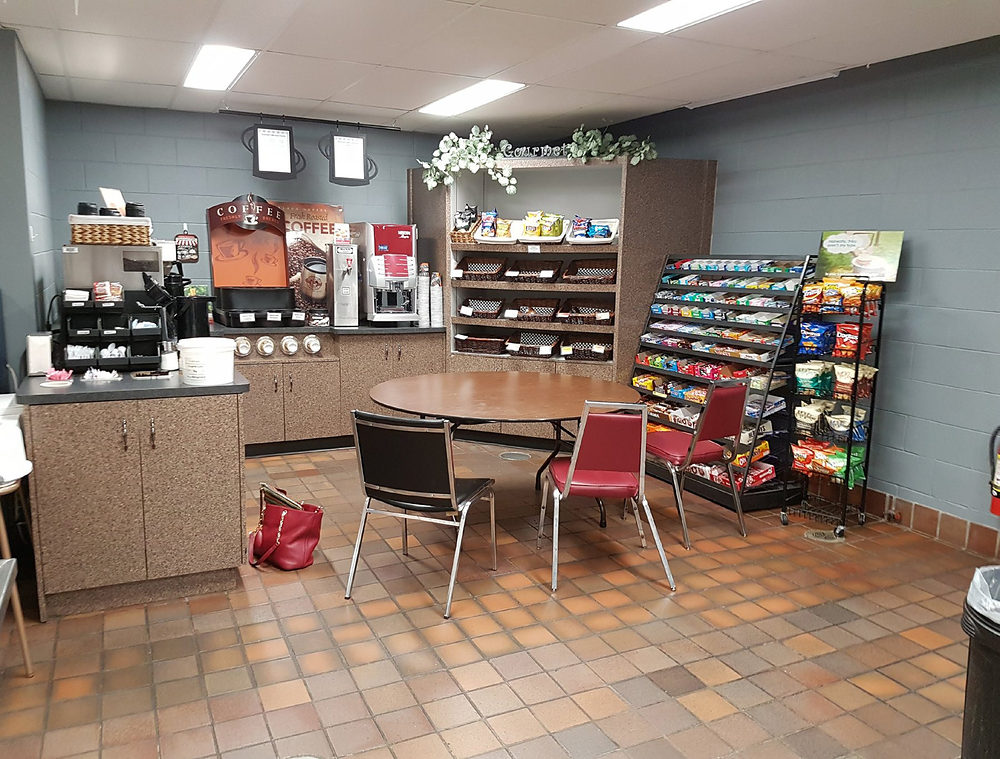
To 99% of the people who look at it, the space above means absolutely nothing; in fact, they might even call it ugly. However, when I, or anyone in my family, look at this space, the range of emotions, memories and thoughts passing through our minds is untraceable. For the number of times that I mopped these tiles, their colour, hue and character will forever be stained into my memory. If I were to analyze my preferences of colour, I would say that I feel most comfortable in spaces of a similar colour to these tiles. Who knows if this is due to my association with my parents’ banquet hall.
I have chosen these two sets of opposing words to describe this space for the memories I have within it. In terms of the space’s three-dimensionality it is really nothing special; it is very standard construction, with materials chosen for their economic value. For these reasons, it is the memories that transform this space into something much more meaningful in my psyche.
Captivity and freedom? It’s quite simple. During the countless events that I worked here with my family and friends, there would always be this juxtaposition of emotion. For the first few hours of the event, we would all have to be focused on preparing the food and serving it in a timely manner. After serving, clearing and washing the dishes we had at the moment, an hour of relief, of freedom from our labours, would come. While the event continued, this was always our time to sit down at the table seen above to eat, drink and share a laugh together. I can’t tell you how many times I lost my breath from laughter at this table. However, there is always something to do, so you are never truly free: you feel free, yet you are captive to whatever task must be done in this hour, and once we can start clearing more silverware, the work commences again.
The reasoning for noise and silence is just as simple. During this “happy hour” we would all be chatting up a storm, and the room was filled with noise from whatever party or event was being hosted in the hall. Yet when you look at the photo above, you can sense the silence that takes over at the times when no event is being hosted. This strange relationship between captivity and freedom, and noise and silence, is a great metaphor for our lives, and for me it represents some of the very best memories of my life.
For these reasons, the genius loci of this space has a profound presence for me. If you can imagine it with the lights off and filled with noise, laughter and memories, you can most certainly feel its warmth and welcome, amplified by the warmth given off by the flooring.
Wine cellar, Figline Vegliaturo, Calabria
Beauty and warmth
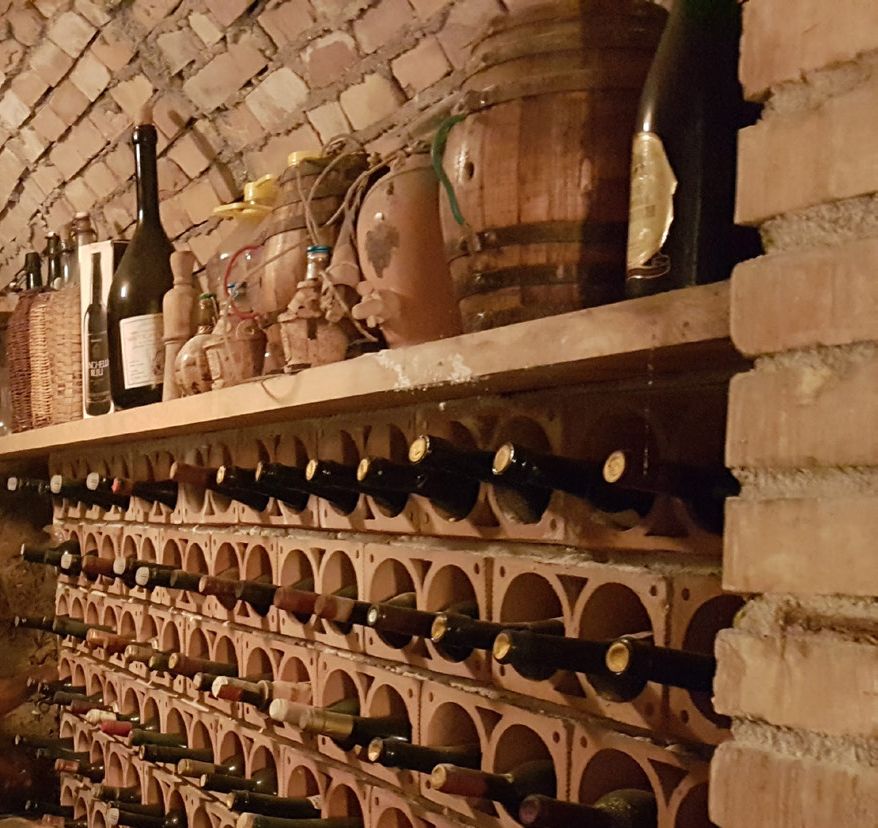
Beauty is a very difficult thing to define. This is, I think, due to its sacred nature. We often associate beauty with that which is of the highest good or value, and the natural response to that would be to worship such a source of beauty. This, to the best of my imagination, is probably why we refer to God as beautiful: because He is omnipotent, meaning there is nothing greater or more powerful than Him. Now, this is not to say that this space is sacred or on par with God, absolutely not; however, it has features that create such a powerful spirit within the space that you can most certainly define it as beautiful. I would go one step further and add that, in the perception of the man who built it, this space is the manifestation of what he perceives as maybe not the highest good in his life, but at the very least a very high good.
As a brief background, it is important to note that this cellar is tucked in behind a beautiful handmade wooden cabinet, in a large space filled with hundreds of pieces of collected antique furniture and even more antique radios. The owner is my grandfather’s childhood friend from their hometown, and he has quite the collection. For him, the space represents the fruits of his labour in this life, and to show it off gives him great joy.
Now you can imagine that after walking through a room filled with all of these very impressive and historical pieces, to walk through a closet and see this is something quite spectacular. He built this space by hand himself. To be inside such a space, and to know that everything you look at was built up piece by piece, brick by brick, hand in hand, and to see how happy it makes this wonderful man, because when he looks back at what he has done he sees a symbol of the grandeur of all that he has created in his life, is special. To understand for yourself that this space is the manifestation of a greater good in this world, for this man and those who know him, makes you call this space beautiful.
Warm: a space such as this can only give off the feeling of warmth, because its story and meaning warm your heart. Whether he knows it or not, the materials chosen and the forms shaped also add a tremendous amount of warmth to this space. The very nature of a brick exudes warmth, because it is so easy to understand its qualities and how it ended up where it has been placed. Being of the scale and proportion to fit perfectly into the human hand, the natural human response is to touch the brick and understand that each one has been placed there by another human hand. The brick arch above our heads extends the human proportion to the height of the space, giving it a greater sense of comfort as the arch stretches around you in a warm embrace. Not only this, but the mud wall at the back also adds to the ambiance of the space, as it lets you understand that you are underground, within the earth; the very creation of God surrounds you.
It is for these reasons that I describe the spirit of the space in the manner I do. Think of all this while drinking a potent glass of homemade Calabrese wine, and the emotions are sure to fly!